
- News
- City News
- bengaluru News
- HC nixes 81-yr-old law on 100% women's quota
Trending
This story is from January 11, 2024
HC nixes 81-yr-old law on 100% women's quota
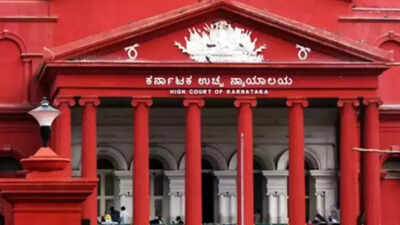
Karnataka high court. (File photo)
"The exclusive reservation conferred on women while recruiting 'nursing officers' under Military Nursing Services Ordinance, 1943, violates the rights guaranteed under Articles 14, 16(2), and 21 of the Constitution of India," the court observed in a recent judgment.

Partly allowing a petition filed in 2011, Justice Anant Ramanath Hegde struck down as unconstitutional the expression "if a woman" found in Section 6 of the said ordinance. The said section had prescribed that "if a woman" is found eligible for appointment as Indian military nursing services officer, she may be appointed to the post.
Women are justifiably considered to be a separate class under the Constitution. However, it doesn't mean that there can be 100% reservation in employment for women to the exclusion of all others when the classification is solely based on the sex and has no rational nexus to the object sought to be achieved. The law providing for exclusive reservations without any intelligible differentia having nexus to the object sought to be achieved, violates the Constitutional guarantee under Article 14 and Article 16 (2) of the Constitution of India and is not saved by Article 15(3) of the Constitution," the judge observed.
On the other hand, the defence ministry argued that the exclusive reservation for women is being provided to fill up the contingent, temporary vacancy that may arise when male nursing officers who are recruited under a separate recruitment process and working in hospitals, are deployed to attend to soldiers on the warfront.
However, Justice Ananth Ramanath Hegde pointed out that the Ordinance, 1943, was promulgated by the then British Crown, and was later adapted vide the adaptation laws, Orders 1950 under Article 372(2) of the Constitution of India. "The law adapted under Article 372(2) of the Constitution of India cannot be equated with the law enacted by Parliament under Article 33 of the Constitution of India," the judge further observed.
End of Article
FOLLOW US ON SOCIAL MEDIA









Photostories

Hot Picks
TOP TRENDING
Popular Categories
Hot on the Web
Top Trends
IND vs NZ Live ScoreMohammad HarisBen DuckettRishbah PantRohit SharmaNayab Singh Saini OathJustin TrudeauPakistan Bomb BlastJharkhand Election ScheduleVaranasi Rail Road BridgeMaharashtra Election Full ScheduleBengaluru FloodBaba SiddiqueAshes ScheduleMaharashtra Election ScheduleJharkhand Election ScheduleLive Cricket Score
Trending Topics
Diwali WishesValmiki Jayanti WishesFake PaneerLiam PayneVettaiyan CollectionVicky Vidya Ka Woh Wala Video CollectionLawrence BishnoiCow GheeBigg Boss 18Salman KhanShraddha KapoorRatan Tata Passed AwayNana PatekarSharad Purnima Moonrise TimeSwatantrya Veer SavarkarSharad Purnima 2024Top Load Washing MachinesBest Premium LaptopsNonstick Cookware SetsWordle Answer
Living and entertainment
Latest News
Nimrat Kaur joins Manoj Bajpayee's 'The Family Man 3' as second villain after Jaideep Ahlawat: Report'Most Special': Examining Andrew Garfield and Amelia Dimoldenberg past embracing conversations amid buzzing chicken shop date promotionBigg Boss OTT fame Adnaan Shaikh and wife Ayesha embark on their first umrah amid family controversyIs Lawrence Bishnoi to India what Dawood Ibrahim is to Pakistan?Entry into Puri Jagannath temple restricted for Kartik month congregationSun Transit in Libra 2024: Its impact on your zodiac sign'Vettaiyan' box office collection day 7: Rajinikanth-Amitabh starrer crosses Rs 118 crore in first weekFour students win inter-school literary festLiam Payne’s death sparks hate comments toward ex Maya Henry: You should be so happy nowWhat Kamala Harris said when asked about Biden's mental fitness during Fox interview: He's not ...Jennie of BLACKPINK performs 'Mantra' on Jimmy Kimmel live!Bikers gun down TMC man in BengalBhopal to witness power cuts today; check details hereNew Sebi norms to improve FPI, bond investors' liquidityActivist saves snake with mouth-to-mouth resuscitationReady for internet services in India: Elon MuskRG Marathon: Akshay, Ankitaben steal the show'Usko akal nahi hai': Mohammad Haris gets bashed by Basit Ali for 'ban on India talks' comment
Copyright © 2024 Bennett, Coleman & Co. Ltd. All rights reserved. For reprint rights: Times Syndication Service